














Annual inspection and avionics: what EASA requires, what it doesn't
Before you sign off an annual you'll be able to sort every avionics item into three piles: what Part-ML lists, what EASA only recommends, and what comes from American rules that don't apply to your aircraft. The transponder is the item most often filed in the wrong pile, since the guidance changed in May 2025.
What Part-ML lists for the annual
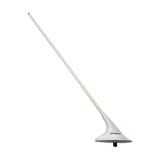
Part-ML covers non-complex aeroplanes up to 2,730 kg MTOM and other ELA2 aircraft outside an air carrier's AOC. Its minimum inspection programme (MIP) for aeroplanes falls due at every annual or 100-hour inspection, whichever comes first, with a tolerance of one month or 10 hours; using the month can leave you with an expired ARC (AMC1 ML.A.302(d)). The avionics items are an operational test of the transponder, a functional test of the pitot-static system, a ground function test of radio and electronic equipment, a check of antennas, wiring, batteries, markings and placards, and a look at software and database status. An operational test needs no quantitative tolerances; a functional test is quantitative, and the measured value should be recorded (GM1 ML.A.302(d)(2)).
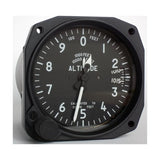
The MIP has no row for an ELT test, a compass swing or an altimeter calibration. Whatever else gets checked comes from your aircraft's maintenance programme and the manufacturer's instructions.
The transponder: a 24-month rule that isn't one
EASA SIB 2011-15R3 of 8 May 2025 removed the general recommendation to test transponders every 24 months. It stays only for systems fed by an analogue (Gilham) altitude encoder, to be verified at least every 24 months. A SIB is information and not mandatory, so the interval that binds you is the one in your maintenance programme plus anything your national authority adds; the sample programme form in EASA's rules still shows two years and hasn't caught up.
A proper test covers reply power, frequency, receiver sensitivity, reply rate, suppression, pulse widths and spacing, ground status and altitude reporting, and a PASS light on a ramp tester is not considered sufficient on its own. A test per the SIB counts as the MIP's transponder task (GM1 ML.A.302(d)(2)(d)). If ATC reports a defect, don't use the transponder until a test has been done and the fault corrected. The 24-month test in 14 CFR 91.413 is an American rule and does not apply to EASA aircraft.
ELT and PLB: battery, test, registration
NCO.IDE.A.170 requires an ELT, an automatic one if the first certificate of airworthiness was issued after 1 July 2008. In aeroplanes certified for six or fewer passenger seats, a survival ELT or a PLB carried by a crew member or passenger will do instead; either must transmit on 121.5 and 406 MHz together. Our shop has the Artex ELT 345 as an ELT and, where that rule allows a PLB, the McMurdo FastFind 220.
AMC1 NCO.IDE.A.170 says the battery should be replaced after more than one cumulative hour of use and before the end of its useful life per the ELT instructions; standard batteries without Form 1, and PLB batteries, at 50% of useful life; and the new expiry date should be marked on the outside. The annual ELT test is a recommendation: EASA SIB 2019-09R1 suggests the self-test from the beacon manual, an annual check of the registration and, for aircraft without an MRB-based programme, an annual inspection with a test. Use the self-test only. If a beacon triggers by accident, switch it off and contact the nearest Cospas-Sarsat MCC or RCC; switching off does not cancel the alert.
Registration is national. In Czechia, for example, every ELT must be registered with Air Navigation Services (ŘLP ČR, RCC Praha) and changes notified (AIC A 5/23). The 12-month ELT inspection in 14 CFR 91.207(d) is, again, American. AIR TEAM service does the avionics side under EASA Part-145 in Kunovice or on your airfield: transponder, pitot-static and altimeter tests, and ELT battery replacement, programming and testing.
Compass, radio and databases
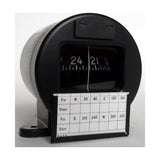
A compass swing is not a Part-ML item. In Czechia the authority (ÚCL) says compensation follows the manufacturer's interval and, if there is none, every 12 calendar months for Part-M aircraft, with 12 months recommended for Part-ML aircraft; an engine or propeller change and a hard landing are among the triggers. After compensation a CS-23 aircraft's compass may show no error greater than 10 degrees on any heading in steady level flight (CS-23.1327). If a compass fails, the AEROSPEC CM13 is a panel replacement; check its installation basis against your aircraft's approval.
8.33 kHz is an airspace requirement, not an annual item: in Czech airspace it applies from FL 0 up, and an aircraft without such a radio cannot enter (AIP GEN 1.5.3). For databases, NCO.IDE.A.205 makes the pilot-in-command responsible for current, unaltered data and names no calendar interval, while the MIP asks for software and database status at each annual.
Before you sign the annual
- Ask what your maintenance programme adds to the Part-ML minimum, and which transponder interval it gives.
- Transponder: test per SIB 2011-15 with values recorded, not only a PASS light.
- Pitot-static: functional test with the measured value recorded.
- ELT or PLB: expiry date on the label, registration current, self-test done.
- Compass: deviation card dated; swing it if anything nearby changed.
- 8.33 kHz for the airspace you fly; database and firmware status noted.
- Placards and markings match the aircraft as it is now.
- Date and result of every test in the aircraft records.
Quiz: The two-year transponder test
Your EASA-registered aeroplane is at its annual. A friend who flies in the USA says your transponder has to be tested every 24 months. Your maintenance programme is built on the Part-ML MIP. What is the correct view? Click an answer.
A) Part-ML asks for an operational test at each annual; EASA keeps a 24-month check only for analogue-encoder systems.
Correct. The operational test is a MIP item (ML.A.302(d)), and a test per SIB 2011-15 covers it. The SIB's 24-month verification now applies only to transponders fed by an analogue (Gilham) altitude encoder.
B) He is right: EASA's SIB 2011-15 asks for a 24-month test of every transponder.
No. Revision 3 of the SIB (8 May 2025) removed the general 24-month recommendation, and a SIB is not mandatory anyway. The rule he knows is 14 CFR 91.413, which is American.
C) A test is needed only if you fly IFR; for VFR the transponder is not inspected.
No. The Part-ML MIP lists an operational test of the transponder, if one is installed, at every annual or 100-hour inspection, whatever flight rules you use.